
Dental Crowns in Bonita Springs for Damaged or Weakened Teeth
If your search for Dental Crowns Bonita Springs brought you here because a tooth is cracked, weakened, heavily restored, worn, or damaged by decay, the first step is understanding how much healthy tooth structure remains. At Dental Blush, the dentist evaluates the affected tooth, surrounding gums, bite, existing dental work, and treatment options before recommending a restoration.
A dental crown covers the visible portion of a prepared tooth and may provide additional protection when a filling or another smaller restoration is not appropriate. The recommendation depends on the condition of the tooth and your individual dental needs.
Our office is located in Pelican Landing on S Tamiami Trail in Bonita Springs. We provide assistance in English and Spanish so patients can comfortably discuss damaged teeth, treatment recommendations, costs, and questions. Hablamos inglés y español.
If you have a damaged tooth, a loose crown, or questions about whether a crown may be appropriate, our team is happy to help at (239) 524-9877.
If you feel ready to request an evaluation, you can use our Appointment Today page. Our team will review your request and follow up regarding availability.
What Is a Dental Crown?
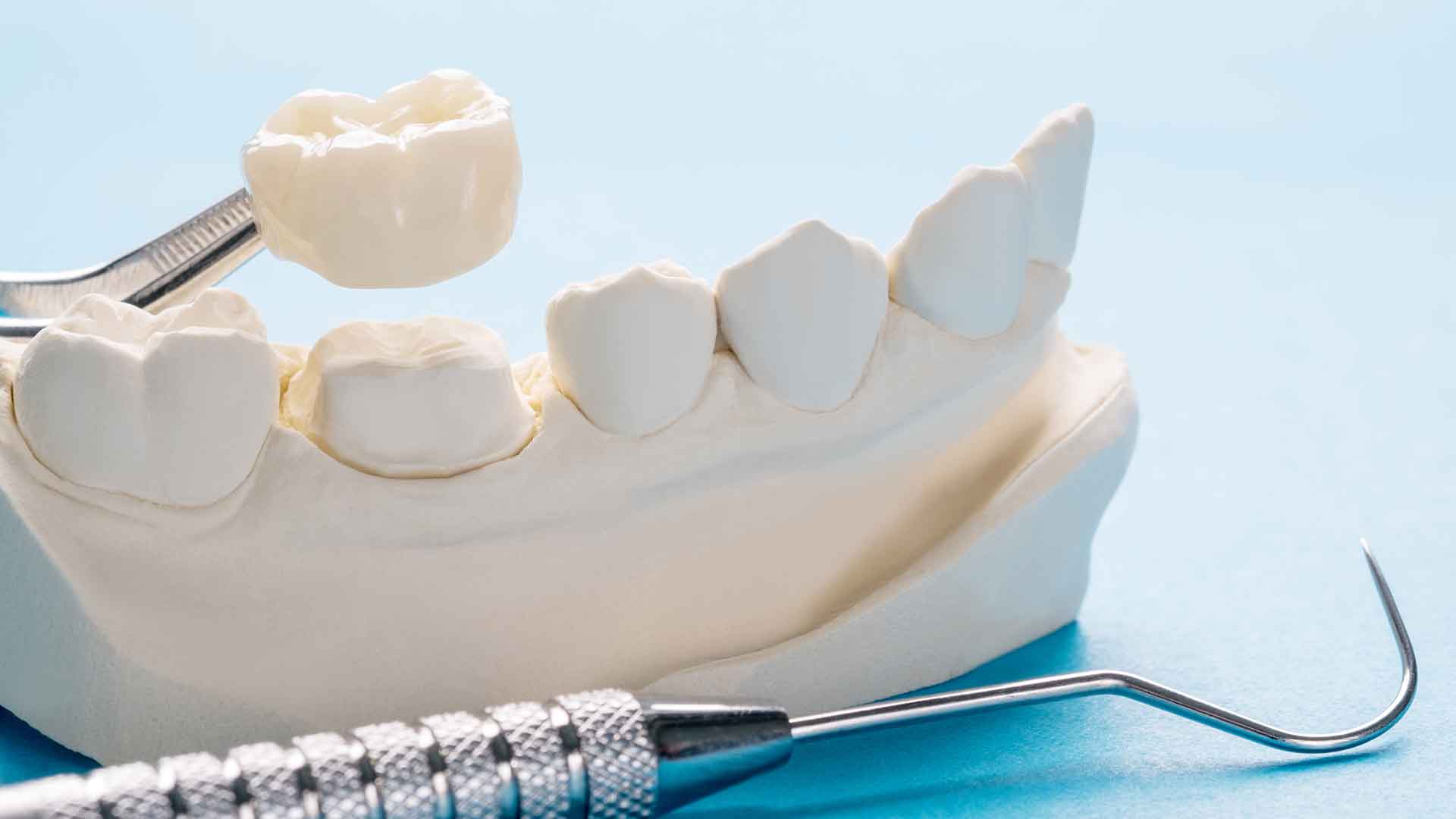
A dental crown is a custom restoration that covers the visible portion of a prepared tooth. It is designed to restore missing tooth structure and may help improve the tooth’s shape, function, protection, and appearance.
Crowns may be considered when a tooth has extensive damage, a large existing restoration, significant wear, or another condition that leaves limited healthy tooth structure. They can also form the visible restoration placed over a dental implant.
For additional patient education, the American Dental Association provides information about dental crowns and situations in which they may be recommended.
When Might a Dental Crown Be Recommended?
A dental crown in Bonita Springs may be considered for several reasons, but an examination is necessary before deciding which restoration is appropriate.
Common situations include:
- A cracked or broken tooth: Additional coverage may help protect remaining tooth structure when the tooth can be restored.
- A large filling or extensive decay: Limited remaining tooth structure may require more coverage than another filling can provide.
- A tooth after root canal treatment: Depending on the tooth and remaining structure, additional protection may be recommended after treatment.
- Significant tooth wear: Grinding, clenching, or other wear can change the shape and function of a tooth.
- Restorative and cosmetic concerns: A crown may sometimes address both structural damage and visible appearance.
- A dental implant: A custom crown may be used as the visible portion of an implant restoration.
The dentist can explain whether a crown, filling, veneer, onlay, extraction, or another treatment may be more appropriate based on the clinical findings.
How Is a Dental Crown Evaluated and Planned?
Planning begins with a discussion about your symptoms, dental history, existing restorations, bite, and concerns. The dentist then examines the tooth and surrounding tissues to understand what may be causing the problem and how much healthy structure remains.
Diagnostic imaging may be recommended when clinically appropriate. These images can provide additional information about tooth roots, surrounding bone, existing dental work, and areas that cannot be completely evaluated by visual examination alone.
You can learn more about the imaging used during dental evaluations on our Dental Radiographs page.
What Happens During Dental Crown Treatment?
The treatment process varies according to the condition of the tooth, the type of crown, the amount of preparation needed, and the individual treatment plan.
- Tooth evaluation and preparation: Damaged or weakened tooth structure is addressed and the tooth is prepared to support the planned restoration.
- Impression or digital record: Detailed information about the prepared tooth and surrounding teeth is collected for the custom crown.
- Temporary protection when needed: A temporary restoration may be used while the final crown is being prepared.
- Final placement: The dentist evaluates the crown’s fit, bite, shape, and appearance before securing it.
- Follow-up care: The dental team explains cleaning, chewing, sensitivity, and maintenance recommendations based on your treatment.
The number of appointments and exact sequence can vary. Your dental team can explain the planned steps before treatment begins.
Crowns After Root Canal Treatment
A tooth that has received root canal treatment may have lost structure because of previous decay, fracture, an existing restoration, or access required during treatment. Depending on the location and condition of the tooth, a crown or another restoration may be recommended afterward.
Not every root canal treated tooth requires exactly the same restoration. Remaining tooth structure, bite forces, tooth position, previous damage, and other clinical findings influence the recommendation.
If you are also dealing with pain or infection inside a tooth, you can learn more about our root canal treatment and how the tooth is evaluated.
How Dental Crowns Are Used With Implants
A crown can also serve as the visible restoration for a dental implant. After the implant treatment reaches the appropriate stage, the restorative portion is designed to replace the visible part of the missing tooth.
Implant restoration planning considers the location of the missing tooth, bite, gum health, available support, surrounding teeth, and appearance goals.
If you are replacing a missing tooth, you can learn more about our dental implant services.
Caring for a Dental Crown
A crown still requires consistent home care because the supporting tooth and surrounding gums remain important to oral health. Regular monitoring also allows the dental team to evaluate the restoration, bite, gumline, and neighboring teeth over time.
- Brush twice a day and clean carefully around the gumline.
- Clean between teeth daily using floss or another appropriate method.
- Avoid using teeth to open packages or bite objects that could damage natural teeth or restorations.
- Let your dentist know if you notice movement, a bite change, a crack, or new sensitivity.
- Maintain recommended dental examinations and professional cleanings.
If you grind or clench your teeth, mention it during your dental visit so the dentist can consider how those forces may affect the tooth and restoration.
What Should You Do if a Crown Becomes Loose or Breaks?
A loose, broken, or lost crown can leave the underlying tooth sensitive or more vulnerable to additional damage. Avoid chewing directly on the affected area and keep the crown if it comes completely off.
Household glue should not be used to reattach a dental crown. The dentist needs to examine the restoration, underlying tooth, bite, and reason it became loose before deciding whether it can be repaired, recemented, or replaced.
If the damaged crown is accompanied by significant pain, swelling, trauma, or another urgent concern, our emergency dental care information explains when prompt evaluation may be appropriate.
Insurance and Financing for Dental Crowns
Dental Blush works with many PPO dental insurance plans and can help review applicable Dental Medicare Advantage benefit information when possible. Coverage, deductibles, limitations, annual maximums, network requirements, and estimated patient responsibility vary according to the individual plan and recommended treatment.
If additional payment flexibility would be helpful for qualifying care, you can review our dental financing information. Approval, rates, available amounts, and payment terms are determined by the financing provider.
Dental Crown Care Near Pelican Landing
Dental Blush is located at 24600 S Tamiami Trl, Suite 206, Bonita Springs, FL 34134, in the Pelican Landing area.
Our office serves Bonita Springs and nearby communities including Estero, Bonita Bay, San Carlos Park, and North Naples.
We provide assistance in English and Spanish so patients can discuss damaged teeth, crown treatment, insurance information, payment options, and follow-up questions in the language they feel more comfortable using.
You can view our Bonita Springs office on Google Maps for directions.
Frequently Asked Questions About Dental Crowns
How do I know if I need a dental crown?
A dental examination is needed to determine whether a crown is appropriate. The amount of remaining tooth structure, cracks, decay, existing fillings, wear, previous treatment, symptoms, and bite can all influence the recommendation.
Does every root canal treated tooth need a crown?
Not necessarily. The final restoration depends on the location of the tooth, remaining structure, previous damage, bite forces, and other clinical findings. Your dentist can explain which restoration is appropriate for the particular tooth.
Can a loose or damaged dental crown be repaired?
Sometimes. Whether a crown can be recemented or repaired depends on the condition of the restoration and the tooth underneath it. Other situations may require a new crown or different treatment.
How long does a dental crown last?
There is no single lifespan that applies to every crown. Material, bite forces, grinding or clenching, oral hygiene, diet, regular dental care, and the condition of the supporting tooth can all affect longevity.
Can I get a cavity under a crown?
The crown itself cannot develop decay, but the natural tooth supporting it can still develop decay near the crown margin or other exposed tooth structure. Daily cleaning and regular dental examinations remain important.
Questions About Dental Crowns in Bonita Springs?
If you have a cracked, weakened, heavily restored, or damaged tooth, you do not need to decide on a crown before having the area evaluated. The dentist can help determine whether a crown or another restoration may be appropriate.
If you have questions about dental crowns, an existing restoration, or what treatment may involve, our team is happy to help at (239) 524-9877.
If you prefer to send a general question online, you can use our Contact Us page.
Dental Blush
24600 S Tamiami Trl, Suite 206
Bonita Springs, FL 34134