
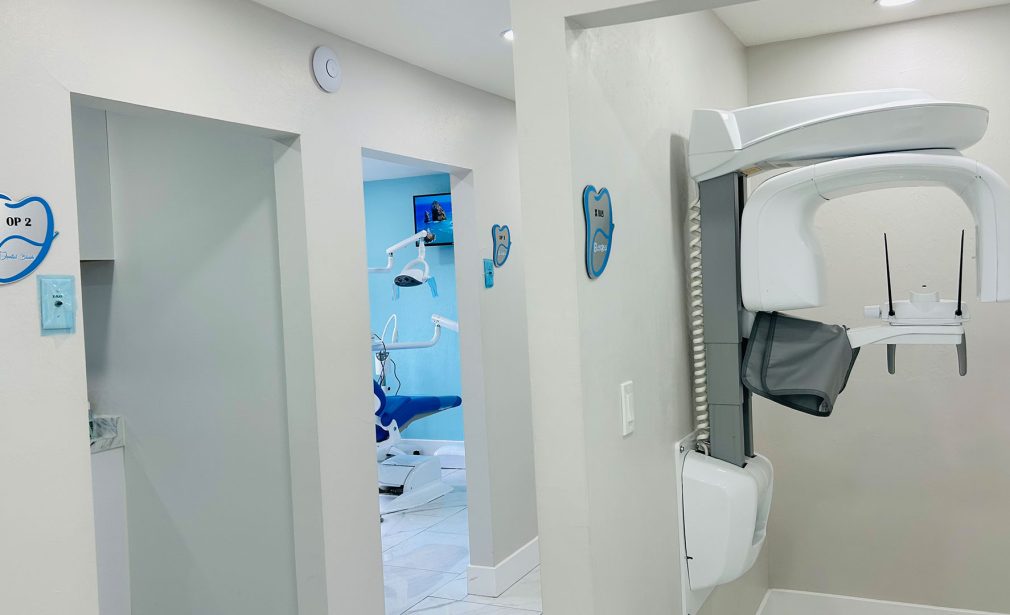
Dental Radiographs in Cape Coral for Diagnostic Care
Dental Radiographs in Cape Coral at Dental Blush help the dentist evaluate teeth, roots, bone, and other areas that may not be fully visible during a clinical examination. Our office uses digital dental imaging when radiographs can provide useful information for diagnosis, preventive care, or treatment planning.
Dental X-rays can reveal changes that may otherwise remain hidden, including decay between teeth, bone changes, infection near a tooth root, impacted teeth, and other dental concerns. The dentist reviews your symptoms, oral health, examination findings, previous images, and current treatment needs before deciding which radiographs may be appropriate.
If you have questions about dental X-rays, tooth pain, diagnostic imaging, or whether recent radiographs from another office may be useful, our team is happy to help at (239) 573-4848. We provide assistance in English and Spanish.
If you feel ready to request a dental evaluation, you can use our Appointment Today page. Our team can review your request and help determine the appropriate type of visit.
What Are Dental Radiographs?
Dental radiographs, commonly called dental X-rays, are diagnostic images that provide information about teeth and surrounding structures. A visual examination can identify many dental concerns, but some conditions develop in areas that the dentist cannot directly see.
Radiographs may provide information about tooth roots, areas between teeth, surrounding bone, impacted teeth, existing dental work, and other structures depending on the type of image.
However, X-rays do not replace the dental examination. The dentist combines radiographic findings with symptoms, clinical examination, dental history, and other information before making a diagnosis or treatment recommendation.
The American Dental Association explains that dentists use radiographs to help diagnose dental conditions that may not be visible during a regular examination. You can review the ADA’s information about dental X-rays and radiographs.
Dental X-Rays Cape Coral: Why Imaging May Be Recommended
Dental X-Rays Cape Coral can provide additional diagnostic information when the dentist identifies a clinical reason for imaging. The need depends on the individual patient rather than a routine schedule that applies to everyone.
Depending on the situation, radiographs may help the dentist evaluate:
- Decay between teeth: certain images can reveal cavities in areas that are difficult to examine directly.
- Tooth roots: radiographs can provide information about root shape, surrounding structures, and changes near the root.
- Bone levels: images may help evaluate bone support around teeth.
- Possible infection: changes near the root or surrounding bone may support the evaluation of pain, swelling, or infection.
- Impacted teeth: imaging can help determine the position of teeth that have not erupted normally.
- Dental trauma: radiographs may provide additional information when a tooth, root, or surrounding area has experienced injury.
- Treatment planning: appropriate imaging may support restorative, endodontic, periodontal, extraction, implant, or tooth replacement planning.
The presence of a finding on an X-ray does not by itself determine treatment. The dentist interprets the image together with the clinical examination and the patient’s individual circumstances.
Types of Dental Radiographs in Cape Coral
Different radiographs provide different views. The dentist selects an image according to the area that needs evaluation and the diagnostic information required.
Bitewing Dental X-Rays
Bitewing radiographs show portions of the upper and lower teeth in a selected area. Dentists commonly use them to evaluate areas between teeth and to review bone levels around the teeth.
Periapical Dental Radiographs
Periapical radiographs show an individual tooth or group of teeth from the visible crown through the root and surrounding area. They may help evaluate tooth pain, root concerns, trauma, or possible infection.
Panoramic Dental Radiographs
A panoramic radiograph provides a broader two-dimensional view of the teeth, jaws, and surrounding structures. Depending on the clinical situation, the dentist may use this type of image when evaluating impacted teeth, tooth replacement, extractions, or other concerns.
Other Dental Imaging When Clinically Appropriate
Some dental conditions require different diagnostic views or additional imaging. The dentist determines what information is needed and whether another type of image would provide meaningful clinical value.
Are Digital Dental X-Rays Safe?
Dental radiographs use ionizing radiation, so the dentist should order them only when the expected diagnostic benefit justifies the exposure. Current recommendations emphasize obtaining the necessary diagnostic information while avoiding unnecessary images.
Dental Blush uses digital dental imaging. Digital receptors form part of current radiation-reduction recommendations because they can obtain diagnostic images with lower exposure than conventional film systems when appropriate techniques are used.
According to current American Dental Association guidance, dental imaging represents a relatively small portion of overall radiation exposure. The ADA recommends selecting radiographs according to clinical need and keeping exposure as low as reasonably achievable while obtaining useful diagnostic information.
How Often Are Dental Radiographs Needed?
There is no single X-ray schedule that applies to every patient. Current recommendations base imaging on individual clinical need.
The dentist may consider:
- Current oral health: existing cavities, gum disease, restorations, or other conditions can affect imaging needs.
- New symptoms: pain, swelling, sensitivity, trauma, or other changes may create a reason for additional evaluation.
- Risk of dental disease: the likelihood of developing cavities or other conditions can influence recommendations.
- Previous radiographs: recent diagnostic images may provide useful information and sometimes reduce unnecessary repetition.
- Clinical examination: findings during the dental exam help determine whether additional imaging could change diagnosis or treatment planning.
- Planned treatment: certain restorative, periodontal, surgical, endodontic, or tooth replacement procedures may require specific diagnostic information.
For this reason, a patient who has no symptoms and stable oral health may have different imaging needs from someone experiencing pain, active dental disease, or a new clinical concern.
Dental Radiographs for Tooth Pain and Infection
Tooth pain can result from decay, inflammation inside the tooth, infection, cracks, bite pressure, trauma, gum problems, or other conditions. A clinical examination remains essential, while an appropriate radiograph can provide information about structures that the dentist cannot see directly.
If the examination and diagnostic findings indicate a problem involving the pulp inside a tooth, the dentist may discuss whether Root Canal in Cape Coral treatment may help preserve the tooth.
Patients with severe pain, facial swelling, trauma, or other urgent symptoms may also need prompt dental evaluation rather than waiting for a routine preventive appointment.
Dental X-Rays and Preventive Dental Care
Not every dental condition causes pain in its early stages. Appropriate radiographs may help identify certain problems before a patient notices obvious symptoms.
At the same time, radiographs are only one part of preventive dental care. The dentist also evaluates the teeth and gums directly, while professional cleaning helps remove plaque and hardened deposits that imaging does not treat.
For information about routine preventive visits, review our Teeth Cleaning in Cape Coral page.
Radiographs for Dental Crowns and Restorative Care
When a tooth has significant decay, structural damage, a large restoration, or another concern, diagnostic imaging may help the dentist evaluate the root and surrounding structures before recommending restorative treatment.
Radiographs alone cannot determine whether a tooth needs a crown. The dentist also evaluates the remaining tooth structure, symptoms, bite, existing restorations, and other clinical findings.
Learn more about restorative evaluation on our Dental Crowns in Cape Coral page.
Dental Radiographs and Gum Health
Radiographs can provide information about the bone that supports the teeth, which may become important when evaluating periodontal disease.
However, periodontal diagnosis also depends on clinical findings such as bleeding, inflammation, gum recession, pocket measurements, tooth mobility, and oral health history.
Patients with concerns about bleeding gums, deeper pockets, or bone support can review our Dental Periodontics in Cape Coral page.
Dental Radiographs for Implant and Tooth Replacement Planning
Dental imaging may form part of an implant or tooth replacement evaluation because the dentist needs information about the teeth, bone, anatomy, and surrounding structures.
The exact imaging requirements depend on the clinical situation and proposed treatment. The dentist determines whether conventional radiographs provide enough information or whether additional evaluation is necessary.
Patients comparing tooth replacement options can learn more on our Dental Implants Cape Coral page.
What Should You Tell the Dental Team Before X-Rays?
Most dental radiographs require little preparation, but accurate information can help the dentist decide whether imaging is necessary and which images may provide useful information.
- Describe your symptoms: explain tooth pain, swelling, sensitivity, trauma, or other dental changes.
- Mention recent radiographs: tell the team if another dental office recently took X-rays that may still provide useful diagnostic information.
- Share relevant medical information: provide updated health history and medications as requested.
- Mention pregnancy: tell the dental team if you are pregnant or may be pregnant so the dentist has complete health information when planning care.
- Explain previous treatment: recent dental work can help the dentist understand which areas may need evaluation.
The dentist can then determine whether new radiographs are clinically necessary rather than repeating images automatically.
Dental Radiographs Cost, Insurance, and Financing
The cost of dental radiographs depends on the type and number of images, examination needs, reason for the visit, and available dental benefits.
PPO dental insurance or Medicare Advantage dental benefits may help with eligible diagnostic radiographs depending on the individual plan. Coverage frequency, deductibles, limitations, network requirements, and patient responsibility vary.
Our team can review available insurance information and discuss estimated costs whenever possible.
If diagnostic findings lead to additional treatment and payment flexibility would be helpful, our Dental Financing Cape Coral page explains third-party financing options available to qualifying applicants.
Digital Dental X-Rays Near Del Prado Blvd S
You can find Dental Blush at 1227 Del Prado Blvd S, Suite 106, Cape Coral, FL 33990, on Del Prado Blvd S in Cape Coral.
Our location is convenient for patients throughout Cape Coral, including areas near Caloosahatchee, Hancock, Pelican, and nearby communities.
We speak English and Spanish. Hablamos inglés y español. Our team can help with questions about diagnostic imaging, recent X-rays, tooth symptoms, insurance information, estimated costs, and appointment requests.
You can view our Cape Coral office on Google Maps for directions.
Frequently Asked Questions About Dental Radiographs in Cape Coral
What are dental radiographs used for?
Dental radiographs provide information about teeth and surrounding structures that may not be fully visible during a clinical examination. Depending on the type of image, they may help evaluate decay, roots, bone levels, impacted teeth, infection, trauma, and treatment needs.
Are dental X-rays safe?
Dental X-rays involve a small amount of ionizing radiation. The dentist weighs the diagnostic benefit against radiation exposure and orders images according to clinical need rather than taking them unnecessarily.
Do I need dental X-rays at every visit?
No. Current recommendations do not support the same imaging interval for every patient. The dentist considers oral health, disease risk, symptoms, previous radiographs, examination findings, and treatment needs.
Are digital X-rays different from traditional film X-rays?
Digital radiography uses electronic receptors rather than conventional film to capture dental images. Current ADA radiation-safety recommendations favor digital receptors as one way to help reduce exposure while obtaining diagnostic information.
Can dental X-rays find cavities?
Certain dental radiographs can help identify decay, especially in areas between teeth that may be difficult to evaluate directly. The dentist combines the image with the clinical examination before making a diagnosis.
Can dental radiographs show gum disease?
Radiographs can provide information about the bone supporting the teeth, but they do not diagnose periodontal disease by themselves. The dentist also evaluates the gums, bleeding, pocket depths, recession, tooth stability, and other clinical findings.
Can I have dental X-rays while pregnant?
Pregnancy does not automatically prevent clinically necessary dental imaging. Tell the dental team if you are pregnant or may be pregnant so the dentist can consider your complete health information and determine whether an image is necessary.
How much do Dental Radiographs in Cape Coral cost?
Cost depends on the type and number of images, examination requirements, available dental benefits, and the clinical reason for imaging. Our team can review available information and discuss estimated patient responsibility whenever possible.
Do you provide assistance in Spanish?
Yes. Our Cape Coral team provides assistance in English and Spanish for dental X-rays, diagnostic information, insurance questions, estimated costs, and appointment requests.
Questions About Dental Radiographs in Cape Coral?
If you have tooth pain, a new dental concern, or questions about whether dental X-rays may be appropriate, our team can help arrange an evaluation so the dentist can determine which diagnostic information is actually needed.
If writing is more convenient for a general question, you can send our team a message through the Contact Us page.
Dental Blush
1227 Del Prado Blvd S, Suite 106
Cape Coral, FL 33990
Phone: (239) 573-4848
Monday-Friday: 8:00 AM-5:00 PM
Saturday: Closed
Sunday: Closed
Humana Dental Insurance


Aetna Dental Insurance


Cigna Dental Insurance


Blue Cross Blue Shield Dental Insurance


Ameritas Dental Insurance


UnitedHealthcare Dental Insurance